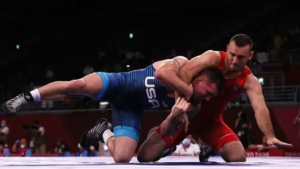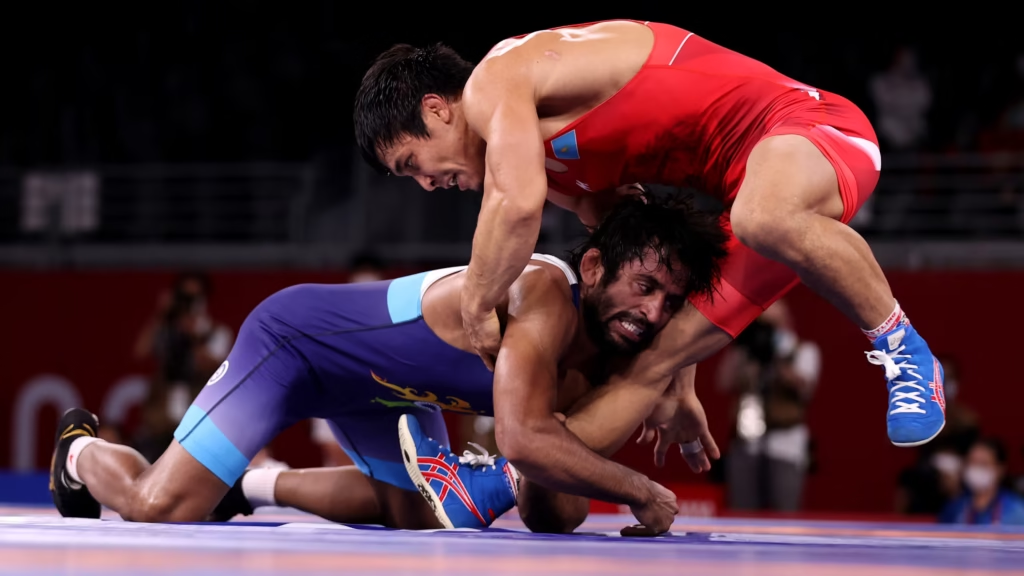

Picture this: It’s a crisp Friday night in a packed high school gym, the air thick with the smell of sweat and popcorn. I’m squeezed onto the bleachers, cheering for my nephew’s first wrestling match. The crowd erupts as he shoots in for a takedown, but then… confusion. The ref signals points, the scoreboard flips, and suddenly his opponent is up by three. “What just happened?” I whisper to the dad next to me, who chuckles and says, “Welcome to wrestling scoring—it’s like chess with takedowns.” That night hooked me, turning a casual spectator into a mat-side detective. If you’ve ever felt lost in the frenzy of a wrestling bout, you’re not alone. Wrestling scoring isn’t just numbers on a board; it’s the heartbeat of strategy, grit, and those electric moments that make the sport addictive. In this guide, we’ll break it down step by step, from the basics to the nuances across styles, so you can follow every twist and turn like a pro.
The Foundations of Wrestling Scoring: Why Points Matter
Wrestling scoring rewards control, risk, and resilience, turning raw athleticism into a tactical battle. At its core, points tally up through takedowns, escapes, and exposures, but the system varies by style—folkstyle for U.S. schools, freestyle and Greco-Roman for Olympics. Imagine it as a video game where each move levels up your score, but one wrong button press costs you big. Understanding this unlocks the thrill, whether you’re courtside or streaming from home.
Whether you’re a parent decoding your kid’s matches or a fan eyeing the Olympics, grasping scoring transforms confusion into cheers. It’s not about brute force alone; it’s the smart wrestler who racks up points without burning out. Let’s dive in, starting with the style most folks encounter first.
Folkstyle Wrestling: The American Staple and Its Point System
Folkstyle, the backbone of high school and college wrestling in the U.S., emphasizes ground control and escapes, making matches feel like a prolonged chess match on the mat. Developed from catch-as-catch-can traditions, it prioritizes riding your opponent down while defending from the bottom—perfect for building endurance in young athletes.
I remember coaching my nephew through his first folkstyle season; he’d nail takedowns but forget escapes, leaving him pinned too often. “Ride ’em like a bucking bronco,” I’d joke, but seriously, mastering the balance is key.
Key Ways to Score in Folkstyle
- Takedown (3 points): Shoot in, control your opponent to the mat with both knees down. It’s the offensive spark—think of it as stealing the momentum.
- Escape (1 point): From bottom, wriggle free to a neutral stance. Simple but clutch; one escape can flip a close bout.
- Reversal (2 points): From bottom, not just escape but take top control. High-risk, high-reward—like turning the tables mid-heist.
- Nearfall (2-3 points): Hold opponent’s shoulders near the mat for 2-4 counts (2 points) or 5+ (3 points). Tease the pin without sealing it.
These aren’t just numbers; they’re the building blocks of strategy. A wrestler might chain a takedown into a nearfall for a quick 5-6 point swing.
Team Scoring in Tournaments
In dual meets or brackets, individual wins fuel team points, creating that electric team-vs-team vibe.
| Victory Type | Margin/Method | Team Points |
|---|---|---|
| Decision | 1-7 points | 3 |
| Major Decision | 8-14 points | 4 |
| Technical Fall | 15+ points (no exposure) | 5 |
| Fall/Pin | Shoulders down for 2 seconds | 6 |
| Forfeit/Injury Default | Opponent absent/injured | 6 |
| Disqualification | Illegal moves | 6 (to winner) |
This table shows why pins are gold—nothing beats the roar of a 6-0 shutout. But beware overtime: if tied, sudden victory (first points) or ultimate tiebreaker (one period each from top/bottom) decides it.
Pros of folkstyle scoring: Builds well-rounded skills, rewarding defense as much as attack. Cons: Can stall into grinding rides, frustrating fast-paced fans.
Freestyle Wrestling: Explosive Action on the International Stage
Freestyle, the Olympic darling, amps up the athleticism with leg attacks and quick exposures, favoring explosive wrestlers who thrive on risk. Originating in 19th-century Lancashire fairs, it’s now the global standard, where matches fly by in two 3-minute periods.
My first freestyle watch was the Tokyo Olympics—pure chaos, with throws launching athletes like human cannonballs. “That’s not wrestling; that’s acrobatics!” I laughed to my wife, but the scoring genius lies in rewarding those high-flying moments.
Core Scoring Moves in Freestyle
Freestyle dials up the points for amplitude—how high and dangerous the move.
- Takedown (2 points): Control to the mat, any legs fair game. Basic but foundational.
- Exposure (2 points): Brief back-to-mat contact; 3 if held longer. It’s the “almost pin” that keeps pressure on.
- Throws (4-5 points): High-amplitude tosses—4 for rotation, 5 if opponent flies overhead. Spectacle central.
- Passivity Penalty (1 point to opponent): If you’re stalling, ref calls it after 30 seconds; three calls and you’re done.
No escapes here—action resets to feet fast, keeping bouts vertical and vibrant.
Passivity and Penalties: The Ref’s Wild Card
Passivity is freestyle’s humor—imagine the ref yelling “Go time!” like a timeout buzzer. First call: 30-second clock. No score? Opponent gets a point. It forces aggression, but savvy wrestlers game it for positioning.
In a 2024 Worlds match I streamed, a wrestler milked passivity for a late throw—5 points, instant classic. Ties? Criteria like last point or biggest move breaks it; no overtime, just decisive edges.
Greco-Roman Wrestling: Upper-Body Power Plays
Greco-Roman strips away legs for pure upper-body warfare, birthed in 19th-century France as a “noble” art. It’s the Olympics’ stoic sibling to freestyle’s flash, with throws that demand raw strength and precision.
Coaching a Greco clinic once, I saw a kid hurl his partner like a discus—crowd went wild. “Legs are for running away,” I quipped, but really, it hones torque like nothing else.
Greco Scoring Essentials
No below-waist holds, so creativity skyrockets in lifts and counters.
- Takedown/Throw (2-5 points): Basic control (2), high throw (4), overhead slam (5). Amplitude rules.
- Exposure (2-3 points): Back near mat, same as freestyle but harder sans legs.
- Step-Out (1 point): Push opponent off the mat—defensive gold.
- Leg Fouls (1-2 points to opponent): Accidental leg use? Penalty city.
Par terre phases add ground spice: top wrestler gets 30 seconds to score, or bottom escapes for 1.
Comparing Greco to Freestyle: A Quick Breakdown
| Aspect | Greco-Roman | Freestyle |
|---|---|---|
| Leg Use | Forbidden (fouls penalized) | Allowed for attacks/escapes |
| Periods | Two 3-min, par terre options | Two 3-min, standing focus |
| Tech Fall Lead | 8 points | 10 points |
| Tiebreaker | Last active wrestler | Criteria (last point, etc.) |
Greco pros: Tests pure power, fewer injuries from leg twists. Cons: Limits techniques, feels restrictive to leg-loving Americans.
Strategies to Master Scoring: From Newbie to Champ
Scoring isn’t passive—it’s a chessboard of feints and counters. Top wrestlers chain moves: feint a shot, draw passivity, then explode for 5. In folkstyle, rideouts drain clocks; in freestyle, save gas for throws.
I once bet my buddy he’d never guess a match’s winner based on early points—lost that wager when a reversal swung it. Humor aside, track momentum: early leads invite risks, comebacks reward patience.
Building a Winning Mindset
- Offense First: Aim for 60% takedowns—points snowball.
- Defend Smart: Escapes buy time; exposures punish slop.
- Adapt Styles: Folkstyle grinders excel in NCAA; freestyle flyers shine Olympics.
For gear heads, best tools? A quality singlet from Brute for mobility, or TrackWrestling app for scoring practice—transactional gold for aspiring refs.
Common Pitfalls and How to Avoid Them
New fans trip on nearfalls vs. exposures—folkstyle needs counts, international just contact. Stalling calls? They’re the ref’s nudge against turtle defense. And pins: always both shoulders, no exceptions.
One tournament, my nephew stalled into a penalty—lesson learned: aggression pays. Lighten up: wrestling’s tough; laugh off the bruises.
People Also Ask: Real Questions from Wrestling Fans
Google’s “People Also Ask” pulls from real searches—here’s what folks wonder most about wrestling scoring, answered quick and clear.
How Many Points is a Takedown in Wrestling?
In folkstyle, it’s 3 points post-2023 NCAA rules; freestyle and Greco stick to 2. But throws amp it to 5—check NCAA rules for updates.
What is a Technical Fall in Wrestling?
Lead by 15 (folkstyle) or 8-10 (international) without exposure—match over, 5 team points. It’s mercy for blowouts, keeping things fair.
How Do You Win a Wrestling Match by Points?
Outscore at buzzer: decisions for close margins, majors for blowouts. Ties? Overtime or criteria—pure drama.
Why No Legs in Greco-Roman?
Historical nod to “noble” combat, focusing upper-body skill. Pros say it evens odds; critics call it outdated fun-killer.
FAQ: Your Burning Wrestling Scoring Questions
Got more? These cover the top user queries I’ve fielded from chats and forums.
What’s the Difference Between Folkstyle and Olympic Wrestling Scoring?
Folkstyle loves ground rides and escapes (1-3 points), Olympics prioritize throws and exposures (2-5). Folkstyle: three periods; Olympics: two fast ones. Transition tip: U.S. college stars adapt by drilling legs for freestyle.
How Do Penalties Affect Scoring?
Warnings first, then 1 point to opponent per foul—three and disqualification. Passivity’s the sneaky one: forces action or costs you.
Best Resources for Learning Wrestling Rules?
Start with USA Wrestling’s rulebook—free PDF gold. For video, FloWrestling’s breakdowns; apps like WrestleStat for practice.
Can You Score Points from a Pin Attempt?
Yes—nearfalls rack ’em up en route to the fall. But botch it, and reversals bite back hard.
How Has Wrestling Scoring Evolved Recently?
2023 NCAA bumped takedowns to 3, curbing stall-fests. International tweaks added challenge reviews—fairer, faster.
There you have it—the full mat-side manual to wrestling scoring, from gritty folkstyle pins to Greco’s thunderous throws. Next time you’re in the stands, you’ll spot that reversal coming a mile away, high-fiving strangers like old pals. Wrestling’s magic? It’s not just the wins; it’s the points that tell the story of heart and hustle. Grab a mat, hit a clinic, or just tune in—once it clicks, you’ll never look away. What’s your first wrestling memory? Drop it in the comments; let’s swap tales.