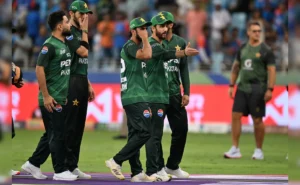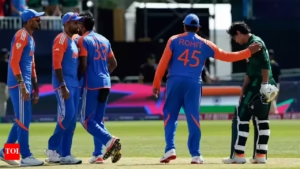

On September 24, 2007, at Johannesburg’s Wanderers Stadium, India and Pakistan clashed in the inaugural T20 World Cup final. This wasn’t just a match—it was a seismic event that reshaped cricket’s landscape, introducing the world to the frenetic, strategy-driven T20 format. The electric atmosphere, the nail-biting finish, and the global impact that followed cemented this game as the one that changed cricket forever.
Why the 2007 T20 World Cup Final Matters
The India-Pakistan final wasn’t just another chapter in their storied rivalry; it was the spark that ignited T20’s global dominance. With India chasing their first major title since 1983 and Pakistan hungry for glory since 1992, the stakes were sky-high. The match’s outcome would not only crown the first T20 world champions but also prove that this new format could captivate audiences like never before.
A New Format Takes Center Stage
T20 was cricket’s bold experiment—a condensed, high-octane version designed to lure younger fans and counter the slower pace of Test and ODI cricket. The 2007 final showcased its potential: unpredictable swings, audacious shots, and relentless pressure packed into three hours. It was cricket, but faster, fiercer, and more accessible.
The Rivalry That Amplified the Drama
India vs. Pakistan is cricket’s ultimate showdown, a rivalry steeped in history and emotion. Their 2007 league-stage encounter in Durban had already ended in a thrilling tie, settled by a bowl-out. The final promised even more intensity, with both teams fielding young, untested squads led by captains—M.S. Dhoni and Shoaib Malik—who were under immense pressure to deliver.
The Build-Up: A Tournament of Surprises
The 2007 T20 World Cup itself was a revelation. Traditional giants like Australia and England faltered, while underdogs like India and Pakistan thrived. India, fresh off a disappointing 50-over World Cup exit, handed the reins to a young Dhoni, with stalwarts like Sachin Tendulkar, Rahul Dravid, and Sourav Ganguly opting out. Pakistan, too, leaned on emerging talents like Misbah-ul-Haq. The stage was set for something unexpected.
India’s Journey to the Final
India’s campaign was a rollercoaster. They stunned England with Yuvraj Singh’s iconic six sixes in an over against Stuart Broad, a feat that became a defining moment of T20’s flair. Their semi-final win over Australia, sealed by Joginder Sharma’s nervy bowling, showed their knack for thriving under pressure.
Pakistan’s Path to Glory
Pakistan’s journey was equally compelling. They overcame early hiccups to defeat New Zealand and South Africa, with Misbah-ul-Haq emerging as a linchpin. Their league-stage clash with India had already set pulses racing, and fans knew the final would be a spectacle.
The Match: A Thrilling Encounter
The final was a masterclass in T20’s unpredictability. India batted first, posting 157/5, thanks to Gautam Gambhir’s gritty 75 and Rohit Sharma’s late flourish. Pakistan’s chase was steady but precarious, with Misbah-ul-Haq steering them close to the target. The final over, bowled by Joginder Sharma, became the stuff of legend.
India’s Batting: Grit Over Glamour
Gambhir’s 75 off 54 balls was the backbone of India’s total, a masterclass in anchoring a T20 innings. Contributions from Yuvraj Singh and Rohit Sharma ensured a competitive score, but Pakistan’s bowlers, led by Umar Gul, kept things tight.
Pakistan’s Chase: Misbah’s Moment
Pakistan’s reply started shakily, with early wickets falling. Misbah-ul-Haq’s composed 43 off 38 balls brought them within striking distance. With 13 runs needed off the final over, the game was anyone’s to win.
The Final Over: Joginder’s Redemption
Dhoni’s decision to hand the last over to Joginder Sharma, a relatively unknown pacer, raised eyebrows. Misbah’s audacious scoop shot off the third ball seemed to tilt the game Pakistan’s way, but Joginder held his nerve. Misbah’s next scoop went awry, caught by Sreesanth, sealing India’s five-run victory. The Bullring erupted, and cricket was never the same.
Why This Match Changed Cricket Forever
The 2007 T20 World Cup final wasn’t just about India’s triumph—it was the moment T20 became cricket’s future. The match’s drama, strategic depth, and global appeal showed that this format could rival Test and ODI cricket. Its ripple effects are still felt today.
The Birth of the IPL
India’s victory sparked a revolution. Within months, the Indian Premier League (IPL) was launched, transforming cricket into a commercial juggernaut. The IPL’s glitz, star power, and massive TV audiences made T20 a global phenomenon, attracting players and fans worldwide.
T20’s Strategic Evolution
The final revealed T20’s tactical complexity. It wasn’t just about slogging; it required smart bowling changes, aggressive fielding, and calculated risks. Dhoni’s gamble on Joginder Sharma highlighted the format’s demand for bold decision-making, setting a template for future captains.
A New Breed of Players
The match thrust players like Dhoni, Gambhir, and Misbah into the spotlight, proving that T20 valued versatility over pedigree. Power-hitters, pinch-hitters, and death-over specialists became the new heroes, reshaping team compositions.
Key Moments That Defined the Match
The 2007 final was packed with moments that still give fans goosebumps. Here are the highlights:
- Yuvraj’s Six Sixes: Though it happened earlier in the tournament, Yuvraj’s assault on Stuart Broad set the tone for India’s fearless approach.
- Gambhir’s 75: His steady knock provided stability, proving anchors had a place in T20.
- Misbah’s Scoop: The mistimed shot that cost Pakistan the game remains one of cricket’s most heartbreaking moments.
- Joginder’s Nerve: An unlikely hero, Joginder’s composure under pressure defined India’s victory.
Comparing T20 to Other Formats
To understand the final’s impact, let’s compare T20 to Test and ODI cricket:
| Aspect | T20 | ODI | Test |
|---|---|---|---|
| Duration | ~3 hours | ~7–8 hours | Up to 5 days |
| Overs per Team | 20 | 50 | Unlimited |
| Pace | Fast, aggressive | Balanced | Strategic, patient |
| Audience Appeal | Casual fans, younger audience | Broad audience | Traditionalists |
| Key Skills | Power-hitting, quick bowling | Stamina, consistency | Endurance, technique |
Pros of T20 Cricket
- Accessibility: Short duration suits modern, fast-paced lifestyles.
- Entertainment: High-scoring games and big hits keep fans engaged.
- Global Reach: Attracts new markets, like the U.S. and Middle East.
Cons of T20 Cricket
- Less Depth: Lacks the tactical nuance of Test cricket.
- Player Burnout: Packed schedules increase injury risks.
- Traditionalist Pushback: Some argue it dilutes cricket’s essence.
The Global Impact: T20 Leagues and Beyond
The 2007 final didn’t just change India—it reshaped cricket worldwide. Leagues like the Big Bash, CPL, and PSL sprang up, mimicking the IPL’s model. T20’s commercial success brought in sponsors, broadcasters, and even Bollywood stars, turning cricket into a global entertainment industry.
Economic Boom
The IPL’s 2008 launch generated billions in revenue, with player auctions and sponsorships redefining cricket’s economics. By 2022, IPL media rights sold for $6.2 billion, a testament to the final’s lasting impact.
New Fans and Markets
T20’s fast pace drew younger audiences and non-traditional markets. Countries like the U.S., where cricket was once niche, saw growing interest, with events like the 2024 T20 World Cup co-hosted there.
Personal Connection: Why This Match Resonates
As a lifelong cricket fan, I remember watching the 2007 final with my family, glued to the TV as Joginder ran in for that final over. The tension was palpable—my dad pacing, my sister screaming every time Misbah hit a boundary. When Sreesanth caught that scoop, our living room erupted. It wasn’t just a win; it felt like India had reclaimed its cricketing soul after years of heartbreak. That moment made me fall in love with T20, and I know I’m not alone.
People Also Ask (PAA)
What was the most iconic moment of the 2007 T20 World Cup final?
The most iconic moment was Misbah-ul-Haq’s mistimed scoop shot, caught by Sreesanth, which handed India a dramatic five-run victory in the final over.
Why was the 2007 T20 World Cup significant?
It introduced T20 as a global format, showcased its commercial potential, and led to the IPL’s creation, revolutionizing cricket’s landscape.
Who were the key players in the 2007 T20 final?
Gautam Gambhir’s 75, Misbah-ul-Haq’s 43, and Joginder Sharma’s final-over heroics were pivotal.
How did the 2007 final impact cricket globally?
It popularized T20, leading to new leagues, increased revenue, and a broader fanbase, especially in non-traditional cricket nations.
FAQ Section
What made the 2007 T20 World Cup final so special?
The final’s high stakes, intense rivalry, and dramatic finish made it unforgettable. It showcased T20’s potential to deliver thrilling, unpredictable cricket.
How did the 2007 final influence the IPL?
India’s victory proved T20’s commercial viability, leading to the IPL’s launch in 2008, which transformed cricket into a global entertainment industry.
Where can I watch highlights of the 2007 T20 World Cup final?
Highlights are available on platforms like ESPN Cricinfo or the ICC’s official YouTube channel.
What are the best tools for following T20 cricket today?
Apps like Cricbuzz, ESPN Cricinfo, and the official ICC app offer live scores, highlights, and analysis for T20 fans.
Did the 2007 final change how cricket is played?
Yes, it highlighted T20’s strategic depth, emphasizing aggressive batting, versatile bowling, and bold captaincy, influencing modern cricket tactics.
Where to Learn More About the 2007 T20 World Cup
For a deeper dive, check out:
- ESPN Cricinfo: Detailed match reports and player interviews.
- ICC Website: Official stats and highlights.
- YouTube: Search for “2007 T20 World Cup final highlights” for free clips.
- Books: “The Great Indian Cricket Circus” by Abhishek Mukherjee offers context on Indian cricket’s evolution.
Conclusion: A Legacy That Endures
The 2007 T20 World Cup final wasn’t just a match—it was a turning point. It introduced a format that brought cricket to new audiences, redefined strategies, and created a multi-billion-dollar industry. From Joginder’s unlikely heroics to the IPL’s global dominance, its impact is undeniable. For fans like me, it’s a reminder of why we love this game: the drama, the passion, and the moments that change everything.