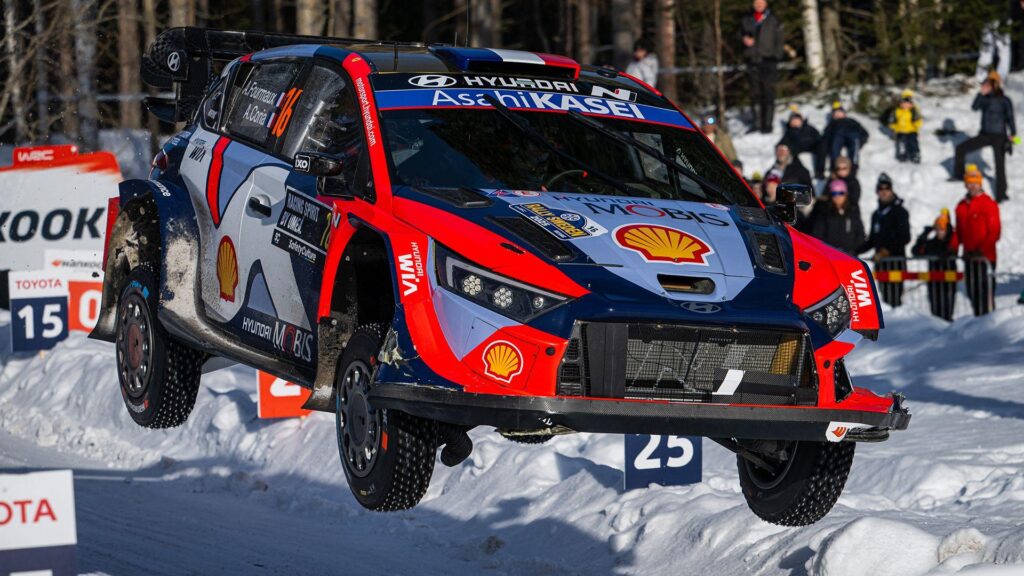

I’ve always been a bit of a speed junkie, but nothing prepared me for the rush of my first World Rally Championship event back in 2018. Picture this: I’m standing roadside in the misty forests of Wales, the air thick with the scent of damp earth and exhaust, when a Toyota Yaris Rally1 hybrid blasts past at what feels like warp speed. Mud sprays everywhere, my heart pounds like a turbo spool-up, and suddenly, I’m hooked. That raw, unpredictable chaos? It’s the soul of the WRC. If you’re new to this adrenaline-fueled frenzy or just curious about the official hub at WRC.com, buckle up—I’m taking you on a deep dive into everything from its gritty history to the 2025 season’s nail-biters.
What is the FIA World Rally Championship?
The FIA World Rally Championship, or WRC for short, is the pinnacle of international rally racing, sanctioned by motorsport’s global watchdog, the Fédération Internationale de l’Automobile. It’s not your typical circuit track fest; think closed-road sprints across gravel, tarmac, snow, and sand, where drivers and co-drivers tackle 15 to 25 special stages per event, clocking up to 350 kilometers of pure, unfiltered mayhem. Launched in 1973, it crowns champions in drivers, co-drivers, and manufacturers categories, blending human grit with cutting-edge tech in a format that’s as much about endurance as outright speed.
What sets WRC apart is its global footprint—14 rounds across four continents in 2025 alone, from Monaco’s hairpin hell to Kenya’s dusty savannas. It’s a test of adaptability, where one wrong note from your co-driver can send you into a ditch. And at the center of it all is WRC.com, the official pulse of the sport, dishing out live timing, standings, and behind-the-scenes scoops that make you feel like you’re in the cockpit.
The Evolution of WRC: A Journey Through Time
Rallying’s roots trace back to the early 1900s with endurance runs like the Thousand Miles Trial in Britain, but the WRC formalized the madness in 1973, kicking off with the iconic Rallye Monte-Carlo. Back then, it was all about manufacturers battling for supremacy with beasts like the Ford Escort RS and Lancia Stratos, amassing 13 events that pushed crews to their limits. Fast-forward through decades of turbo eras, Group B’s wild excesses (RIP, those flying Fiats), and the safer-but-still-ferocious Group A showdowns, and you’ve got a sport that’s evolved into a hybrid-powered spectacle.
I chuckle thinking about the ’80s—drivers like Walter Röhrl treating Audi Quattros like extensions of their souls, while fans dodged flying debris from jumps that defied physics. Today, it’s greener and fiercer, but that core thrill? Untouched. WRC’s history isn’t just dates; it’s a tapestry of triumphs and tragedies that forged legends.
Key Milestones in WRC History
- 1973: Birth of the Beast – The championship launches with Monte-Carlo, focusing on manufacturers’ glory.
- 1979: First Drivers’ Crown – Swede Björn Waldegård claims the inaugural title in a Ford Escort.
- 1986-87: Group B’s Golden (and Gory) Age – Insanely fast cars like the Peugeot 205 T16 dominate until safety cracks down.
- 1997: World Rally Car Era Dawns – Standardized regs level the playing field for icons like Subaru Impreza.
- 2004-2012: Loeb’s Dynasty – Citroën’s Sébastien Loeb racks up nine straight titles, rewriting the record books.
These moments aren’t footnotes; they’re the fuel that keeps fans like me coming back, sharing stories over pints about how a single stage can rewrite history.
How Does a WRC Rally Actually Work?
At its heart, a WRC rally is a multi-day gauntlet divided into legs, with crews starting from a central service park where teams swap tires, tweak setups, and pray for no gremlins. Each day packs in special stages—timed blasts on closed public roads—interspersed with road sections to the next test. Points flow from overall finishes (25 for first, down to 1 for 10th) plus bonus five from the dramatic Power Stage finale, where the top five snag extra tallies that can swing championships.
Co-drivers are the unsung heroes, barking pace notes like “30 left, crest, don’t lift!” over the engine’s roar, turning potential disaster into dance. It’s not just speed; strategy reigns—tire choices for gravel vs. asphalt, hybrid energy deployment in Rally1 cars. WRC.com shines here, with live maps and telemetry that let you track every hairpin in real-time, making remote spectating almost as visceral as being there.
The Role of Co-Drivers in WRC Success
Without a sharp co-driver, even the fastest driver is just a passenger. They map routes months ahead, calling out crests, junctions, and “kangaroos” (those surprise jumps). Take Olivier Landais, Loeb’s longtime partner—his calm under chaos was key to those nine titles. It’s a symbiotic gig, blending trust and telepathy.
Humor me for a sec: Ever tried navigating a road trip with a friend yelling directions? Multiply that by 200 km/h, add dirt, and subtract brakes. Co-drivers aren’t sidekicks; they’re the co-pilots keeping the dream alive.
Spotlight on the 2025 WRC Season: Twists, Turns, and Triumphs
As of September 18, 2025, the 2025 season is a nail-biter, expanded to 14 rounds with Rally Saudi Arabia’s desert debut capping things off in November. It fired up in January with Sébastien Ogier snagging Monte-Carlo for his 10th win there, a record that had fans like me fist-pumping from afar. Elfyn Evans stole Sweden’s snowy glory by a razor-thin 3.8 seconds, while the Safari Rally in Kenya tested hybrids against lions (okay, mostly dust and breakdowns).
Thierry Neuville’s Hyundai squad is lurking, but Toyota’s trifecta—Ogier (224 points), Evans (222), and Kalle Rovanperä (203)—leads the manufacturers’ fray. Oliver Solberg just clinched WRC2 at Rally Chile, proving the support series’ depth. With flyaways like Paraguay and Japan ahead, expect drama—weather whims and mechanical roulette could crown a new king.
2025 WRC Calendar Highlights
| Round | Event | Dates | Surface Mix | Standout Moment |
|---|---|---|---|---|
| 1 | Rallye Monte-Carlo | Jan 22-26 | Asphalt/Snow | Ogier’s 10th win, hybrid mastery |
| 2 | Rally Sweden | Feb 13-16 | Snow/Gravel | Evans edges Katsuta by seconds |
| 3 | Safari Rally Kenya | Mar 20-23 | Gravel/Dust | Rovanperä survives mechanical woes |
| 4 | Rally Croatia | Apr 17-20 | Asphalt | Neuville’s comeback charge |
| 14 | Rally Saudi Arabia | Nov (TBD) | Desert/Sand | Series finale debut, endurance epic |
This table’s my cheat sheet for the year—print it, pin it, live it. Each rally’s a world unto itself, from Croatia’s coastal twists to Saudi’s endless dunes.
Iconic Drivers Who Defined WRC Glory
No WRC tale skips the humans behind the helmets. Sébastien Loeb’s nine consecutive crowns from 2004-2012? That’s not luck; it’s surgical precision in a Citroën Xsara, turning stages into solos. Colin McRae, the Scottish firebrand, brought showmanship with his “if in doubt, flat out” ethos, winning in ’95 and inspiring a generation (and a video game empire). Then there’s Tommi Mäkinen, the Finn who dominated the ’90s in Mitsubishis, his four straight titles a masterclass in consistency.
Sébastien Ogier, with eight belts, mirrors Loeb’s dominance but adds part-time flair—racing bikes, winning Le Mans. And don’t sleep on Kalle Rovanperä, the 22-year-old phenom who snagged 2022’s crown, proving youth can tame the beast. These aren’t stats; they’re stories of obsession, like McRae’s infamous jumps that left me grinning through gritted teeth on TV.
Top 5 All-Time WRC Drivers: A Quick Ranking
- 1. Sébastien Loeb – 9 titles, 80 wins; the benchmark of brilliance.
- 2. Sébastien Ogier – 8 titles, versatile virtuoso.
- 3. Marcus Grönholm – 2 titles, gravel god with Peugeot punch.
- 4. Tommi Mäkinen – 4 titles, Mitsubishi’s unflappable Finn.
- 5. Colin McRae – 1 title, endless charisma and chaos.
Rankings spark bar fights among fans, but hey, it’s all love for these wheel wizards.
Inside the Machines: Rally Cars That Rule the Roads
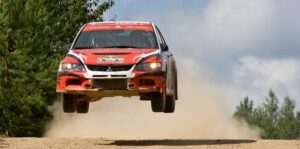
WRC’s stars aren’t just drivers; the cars are co-conspirators, evolving from rear-drive relics to 500-hp hybrids. Rally1 regs demand 1.6L turbo engines with 100kW electric boosts, all-wheel drive, and sequential gearboxes that shift smoother than a politician’s promise. Weights hover at 1,190kg, with aero tweaks for downforce on jumps—because who doesn’t love a 50-meter leap?
Compare that to WRC2’s Rally2 cars: Same engine but no hybrid, capped at 30mm restrictors for “mere” 290hp, perfect for privateers climbing the ladder. It’s a pyramid—Rally5 at the base for juniors in stock-ish hatches. I once test-drove a sim of a Rally1 Ford Puma; the grip, the yaw control—it’s like cheating physics, until a rut reminds you who’s boss.
Rally1 vs. Rally2: Specs Showdown
| Feature | Rally1 (Top Tier) | Rally2 (Support) |
|---|---|---|
| Power | 380hp (engine) + 100kW hybrid | 290hp (no hybrid) |
| Weight | 1,190kg | 1,230kg |
| Top Speed | ~200km/h | ~185km/h |
| Cost (Est.) | $800K+ per season | $300K per car |
| Pros | Hybrid edge, aero wizardry | Affordable access, raw fun |
| Cons | Complex regs, high stakes | Less power punch |
This breakdown? Gold for gearheads. Rally1’s tech dazzles, but Rally2’s purity keeps it real.
Pros of Rally1 Cars:
- Unmatched acceleration and efficiency.
- Hybrid systems for eco-cred and overtakes.
Cons of Rally1 Cars:
- Sky-high development costs.
- Reliability roulette in remote rallies.
Rally2 flips it—cheaper thrills, but you’ll feel every horsepower gap on straights.
Best Ways to Experience WRC in 2025: From Sofa to Sidelines
Want in on the action without selling a kidney? Start with Rally.TV, the official stream hub—live stages, onboards, and analysis for a steal. DAZN’s Rally channel pipes it globally, while free highlights hit YouTube and WRC.com. For the full immersion, snag tickets via WRC.com/events—Paraguay’s spectator stages are a bargain at $50/day.
I’ve chased rallies from Wales to Estonia; nothing beats the ground vibe—the roar vibrating your bones, locals sharing brews. But if travel’s a no-go, VR sims on Steam mimic the madness. Pro tip: Follow X accounts like @OfficialWRC for real-time banter that feels like chatting with mates at the pub.
Transactional Tips: Gear Up for WRC Fandom
- Streaming Subs: Rally.TV ($9.99/month) for HD glory.
- Merch Must-Haves: Official caps from FIA store—Ogier edition, $35.
- Sim Tools: WRC 10 on Steam ($29.99) for virtual stages.
- Tickets: Book early on WRC.com; VIP passes ~$200 for pit access.
These picks turn passive viewing into passion projects. Trust me, that first onboard cam? Addictive.
Pros and Cons: Live Attendance vs. Online Viewing
Live Attendance Pros:
- Sensory overload—the smell, the spray, the split-second passes.
- Meet drivers; I once high-fived McRae’s spirit (okay, a cardboard cutout, but still).
Live Attendance Cons:
- Weather whims—rain turns paradise to mud pit.
- Logistics: Flights, hotels add up quick.
Online Viewing Pros:
- Zero travel; pause for snacks mid-stage.
- Multi-angle replays dissect every drift.
Online Viewing Cons:
- Lacks that crowd electric hum.
- Buffering during peaks—argh!
Balance both for the win: Stream the opener, road-trip a local round. It’s how I keep the fire lit without burnout.
People Also Ask: Your Burning WRC Questions Answered
Diving into common curiosities from search trends, here’s the lowdown on what folks are typing into Google right now.
What does WRC stand for? WRC means World Rally Championship, the FIA’s flagship series blending speed, strategy, and survival across global terrains.
Who won the 2024 WRC championship? Thierry Neuville clinched his first drivers’ title in 2024, edging out a fierce Toyota trio in a season of surprises.
When is the next WRC rally after September 2025? Post-Chile, it’s Rally Paraguay (October 2-5), then Japan—mark your calendars for gravel and tarmac twists.
How many stages are in a typical WRC rally? Expect 15-25 special stages per event, totaling 250-350km, with each leg building to a Power Stage climax.
What is the difference between WRC and WRC2? WRC is the elite Rally1 hybrid class; WRC2 uses cost-capped Rally2 cars for rising stars, same tracks, lower drama (but still plenty).
These hit the informational sweet spot—quick facts for quick minds.
FAQ: Tackling Real Fan Queries
Got questions? I’ve fielded these from rally rookies at events and online forums. Straight talk, no fluff.
Q: Where can I buy official WRC tickets and merch? A: Head to WRC.com for tickets—early bird saves bucks. Merch? The FIA shop or event vendors; snag a Loeb-signed poster if you’re lucky.
Q: What’s the best beginner’s guide to understanding rally scoring? A: Points: 25-18-15-12-10-8-6-4-2-1 for top 10, plus Power Stage bonuses. Best six of seven WRC2 rounds count—keeps it tight. Check WRC.com’s explainer vids.
Q: How do I start rallying myself on a budget? A: Dip into Rally5 with a modded street car (~$5K entry). Join local clubs via FIA affiliates. Sim racing first—WRC 10 hones skills sans scrapes.
Q: Is the 2025 WRC calendar finalized? A: Yes, 14 events locked, from Monte to Saudi. Updates on Motorsport.com.
Q: Why watch WRC over Formula 1? A: Raw unpredictability—no barriers, all surfaces, co-driver banter. F1’s polished; WRC’s poetry in peril.
Wrapping Up: Why WRC Still Steals Hearts in 2025
From my muddy Welsh epiphany to tracking 2025’s hybrid heroes on WRC.com, this sport’s a living legend—equal parts terror, triumph, and sheer joy. It’s not for the faint-hearted, but for those who crave the edge, it’s unmatched. Whether you’re plotting a pilgrimage to Paraguay or streaming Sweden from your couch, dive in. The roads await, notes at the ready. What’s your first rally memory? Drop it in the comments—let’s swap stories.